Ginko Sotbab Rice
(은행 솥밥)
Ginkgo Nut Sotbap is a quietly restorative Korean rice dish traditionally enjoyed during the colder months, when the body begins to crave warmth, grounding, and deeper nourishment. With its delicate woody aroma, soft golden nuts, and comforting steam rising from freshly cooked rice, this dish embodies the calm transition between autumn and winter. In Korean nourishment traditions, ginkgo nuts have long been valued for supporting the lungs, circulation, and the body’s ability to conserve energy during colder seasons. Combined with rice, they create a meal that feels deeply steadying, elegant, and restorative.
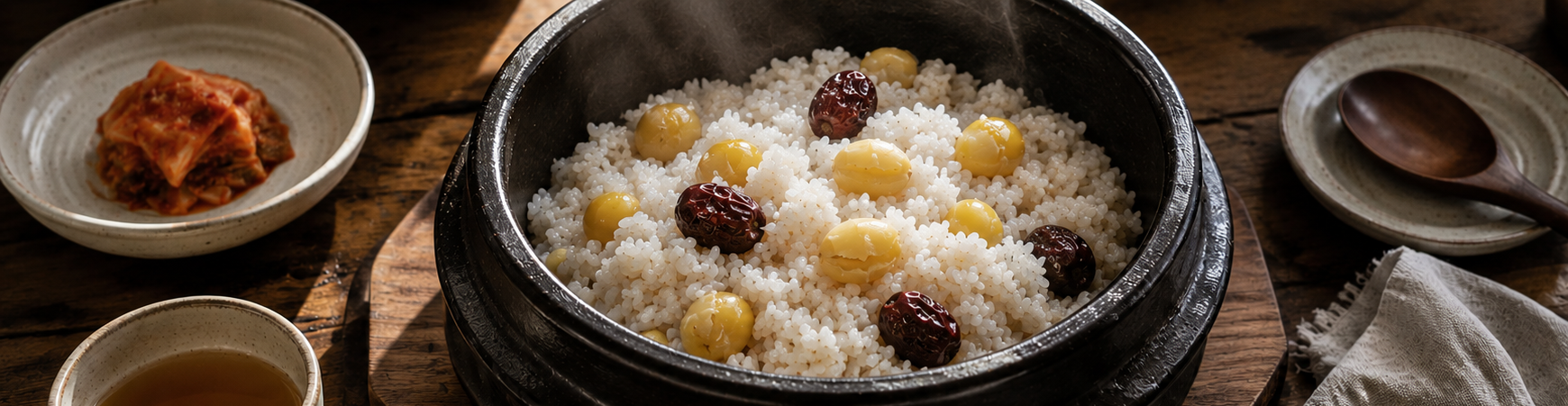
As the air becomes colder and drier, the body often begins to show subtle signs of depletion — dry coughs, lowered stamina, or a lingering feeling of internal chill.
In Korean herbal traditions, ginkgo nuts have long been treasured during this seasonal transition for their warming and astringent qualities.
Often referred to as “golden guardians,” they are associated with helping the body gather and preserve energy inward during winter. Their flavour is gentle yet distinctive — slightly bitter, nutty, and deeply aromatic once toasted.
Paired with warm rice, ginkgo nuts become both grounding and quietly luxurious, carrying the feeling of winter forests into the home.
The Golden Sentinel
Why Ginko Nuts?
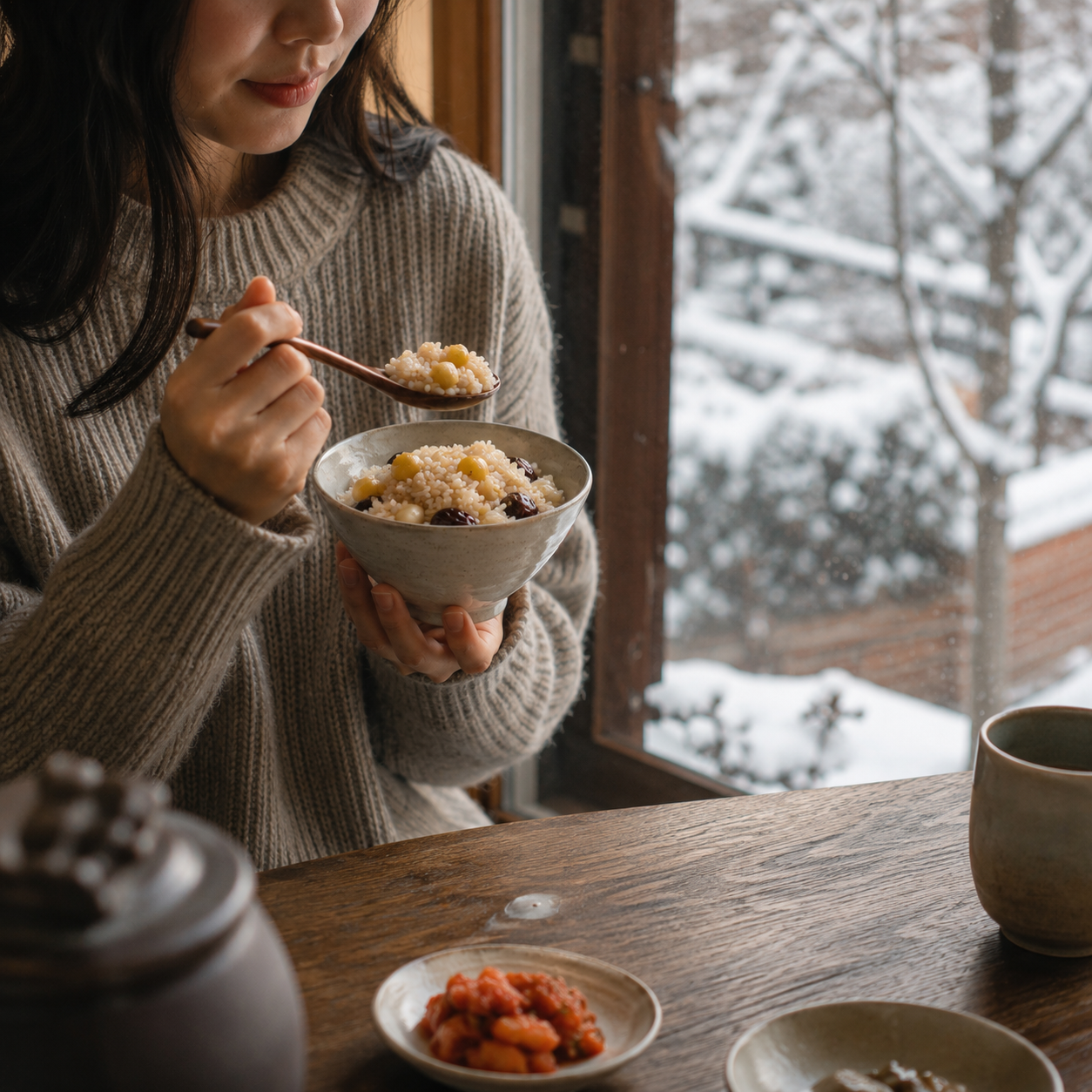
Seasonal Warmth
Traditionally enjoyed during colder seasons to support warmth, grounding, and internal balance.
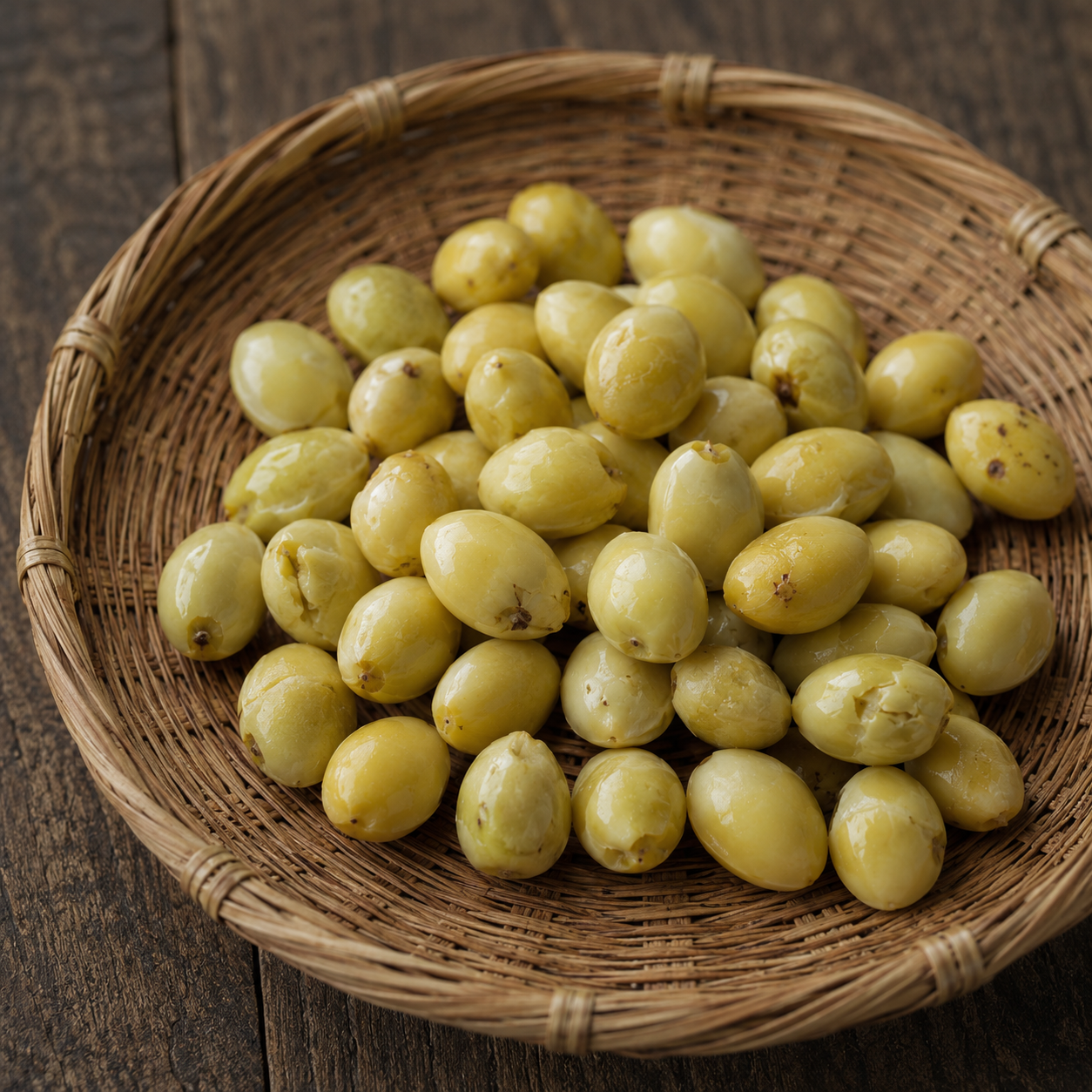
Respiratory Support
Ginkgo has long been associated with supporting the lungs and helping soothe seasonal dryness.

Gentle Nourishment
Combined with rice, ginkgo nuts create a comforting meal that feels sustaining without heaviness.
The Recipe
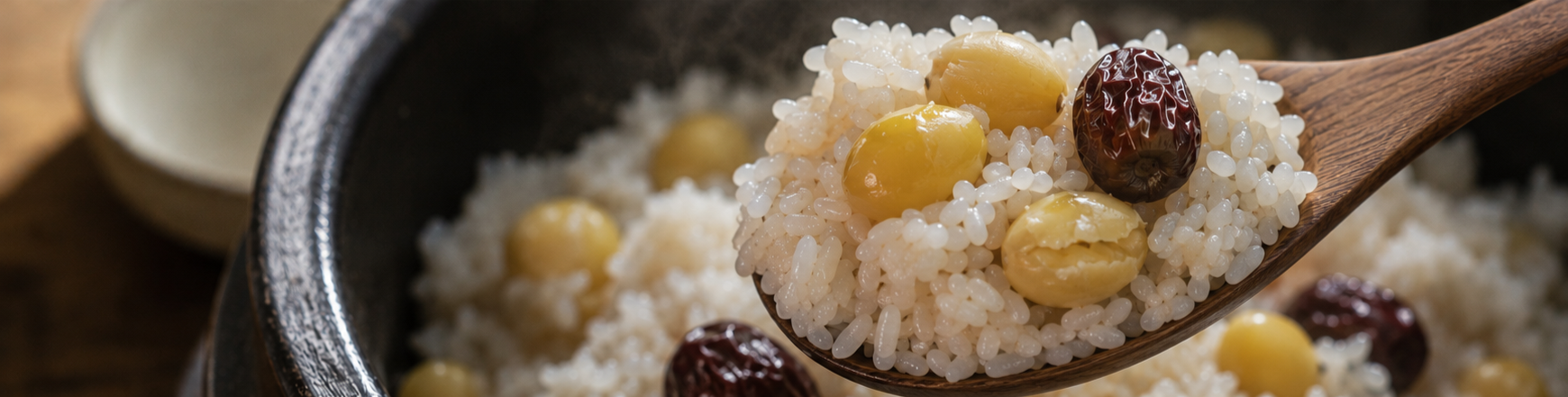
Ginko Nuts Sotbap
Ingredients
Rice
2 cups rice
Water (slightly less than usual for a firmer texture)
Ginko Nuts
15–20 ginkgo nuts
Optional Garnishes
Perilla oil or sesame oil
Spring onions
Light soy seasoning
Serves 2-4 | Prep time 20 minutes | Cooking time 25-30 minutes
Directions
Prepare the ginkgo nuts
Gently crack the outer shells using a nutcracker or small mallet.
Remove the shells carefully while keeping the nuts intact.
Toast slowly
Place the nuts in a dry pan over low heat.
Roll them gently as they toast until the colour deepens into a rich golden amber and the thin inner skins begin to loosen.
Wrap the warm nuts lightly in a towel or paper towel and rub gently to remove the skins.
Prepare the rice
Wash the rice thoroughly and place into a rice pot or stone pot.
Use slightly less water than usual to create a more structured and elegant texture.
Combine and cook
Scatter the prepared ginkgo nuts over the rice before cooking.
Allow the rice and nuts to cook together slowly so the aroma infuses throughout the grains.
Rest and steam
Once cooked, allow the rice to rest covered for 5 minutes.
This final steaming stage deepens the aroma and creates a softer, more cohesive texture.
Serve
Serve warm with a light drizzle of perilla oil or simple soy seasoning if desired.
Gentle Notes
Raw ginkgo nuts should not be consumed in large quantities and must always be cooked thoroughly before eating.
A moderate serving is generally recommended, as ginkgo nuts are traditionally enjoyed in small amounts rather than excessively.
The subtle bitterness of ginkgo pairs beautifully with warm rice and aromatic oils.
For additional warmth during winter, this dish can also be served alongside soups, roasted mushrooms, or lightly seasoned greens.
A Bowl for
Slower Seasons
As the seasons grow colder, the body naturally asks for slower rhythms, warmer meals, and moments of quiet restoration. Ginkgo Nut Sotbap carries that feeling gently — the soft steam rising from the bowl, the earthy aroma of toasted nuts, the comfort of warmth settling slowly through the body.