Born with a Small Digestive Engine?
Why Your Stomach Gets Tired Easily — and How to Nourish It
Have you ever felt full after just a few bites, even when you were hungry?
Or felt as though your food was sitting in your stomach, refusing to go anywhere?
Some people seem to have a naturally delicate digestive system. They eat small portions, often feel bloated or heavy after meals, and tend to get tired easily.
In East Asian medicine, we sometimes understand these tendencies through the idea of constitution — the individual characteristics and patterns of response that shape how our bodies function.
In Sasang constitutional medicine, people with these digestive tendencies may be associated with the Soeumin (소음인) constitution, although digestion alone does not determine someone's constitutional type.
I sometimes explain this to my patients with a simple analogy:
"You may have been born with a small digestive engine."
It doesn't necessarily mean something is wrong with your stomach. It may simply be a useful way to understand why your digestion seems more sensitive than someone else's.
Traditional Korean medicine also considers signs such as the tongue, appetite, temperature preferences and habitual digestive patterns when assessing an individual's condition. However, these signs cannot establish the physical size or strength of the stomach muscles.
When Food Sits Too Long
Imagine asking a small engine to do the work of a much larger one.
Even when the food is delicious, eating more than your stomach comfortably handles may leave you feeling heavy, bloated or uncomfortably full.
In modern medicine, symptoms such as early fullness and a prolonged sensation of food remaining in the stomach can occur in conditions including functional dyspepsia and delayed gastric emptying.
Some people are diagnosed with gastric motility disorders. Others undergo investigations that reveal no obvious structural abnormality, yet their discomfort continues.
A normal-looking stomach doesn't always mean comfortable digestion.
From a East Asian medicine perspective, these experiences may be interpreted in relation to the individual's constitutional tendencies and digestive function.
However, a sensation of sluggish digestion does not necessarily mean the stomach muscles are weak, and gastroptosis or gastric atony cannot be attributed to constitution alone.
A Little Warmth Goes a Long Way
In East Asian medicine, yangsaeng (양생) refers to the everyday practice of nourishing and caring for health.
For people who find their digestion easily overwhelmed, I often suggest beginning with something simple: choose foods that feel gentle and comfortable in your stomach.
Traditionally, warm, cooked foods are recommended for people who experience digestive discomfort alongside a tendency to feel cold.
Think about those mornings when you have little appetite. It's tempting to grab fruit straight from the fridge or quickly blend frozen fruit into a smoothie.
There is nothing inherently unhealthy about cold fruit or smoothies. However, some people find that very cold foods, large portions or quickly consumed drinks make their symptoms worse.
If this sounds familiar, try something different.
A warm bowl of porridge. Softly cooked vegetables. A comforting soup. A small meal eaten slowly.
You don't need to eat less than your body requires. Instead, consider smaller, more frequent meals if large meals leave you uncomfortable.
Sometimes, the simplest changes make eating a little more enjoyable.
Stronger Legs, Happier Digestion?
What do your legs have to do with your stomach?
More than you might think.
Skeletal muscle plays an important role in glucose metabolism, and the large muscles of the lower body contribute substantially to how our bodies use and store energy.
Maintaining muscle strength and staying physically active support metabolic health and general wellbeing.
Of course, stronger leg muscles don't directly strengthen the stomach muscles or guarantee better gastric emptying.
But regular movement can be a valuable part of looking after your overall health.
And you don't need an intense workout to begin.
Walk regularly. Use your legs. Build strength gradually.
A gentle walk after meals, when comfortable, can be a lovely daily habit.
The goal isn't to exhaust yourself. It's to keep your body moving and support its natural functions.
My Favourite Herb: Perilla Leaves
" Let's talk about something delicious "
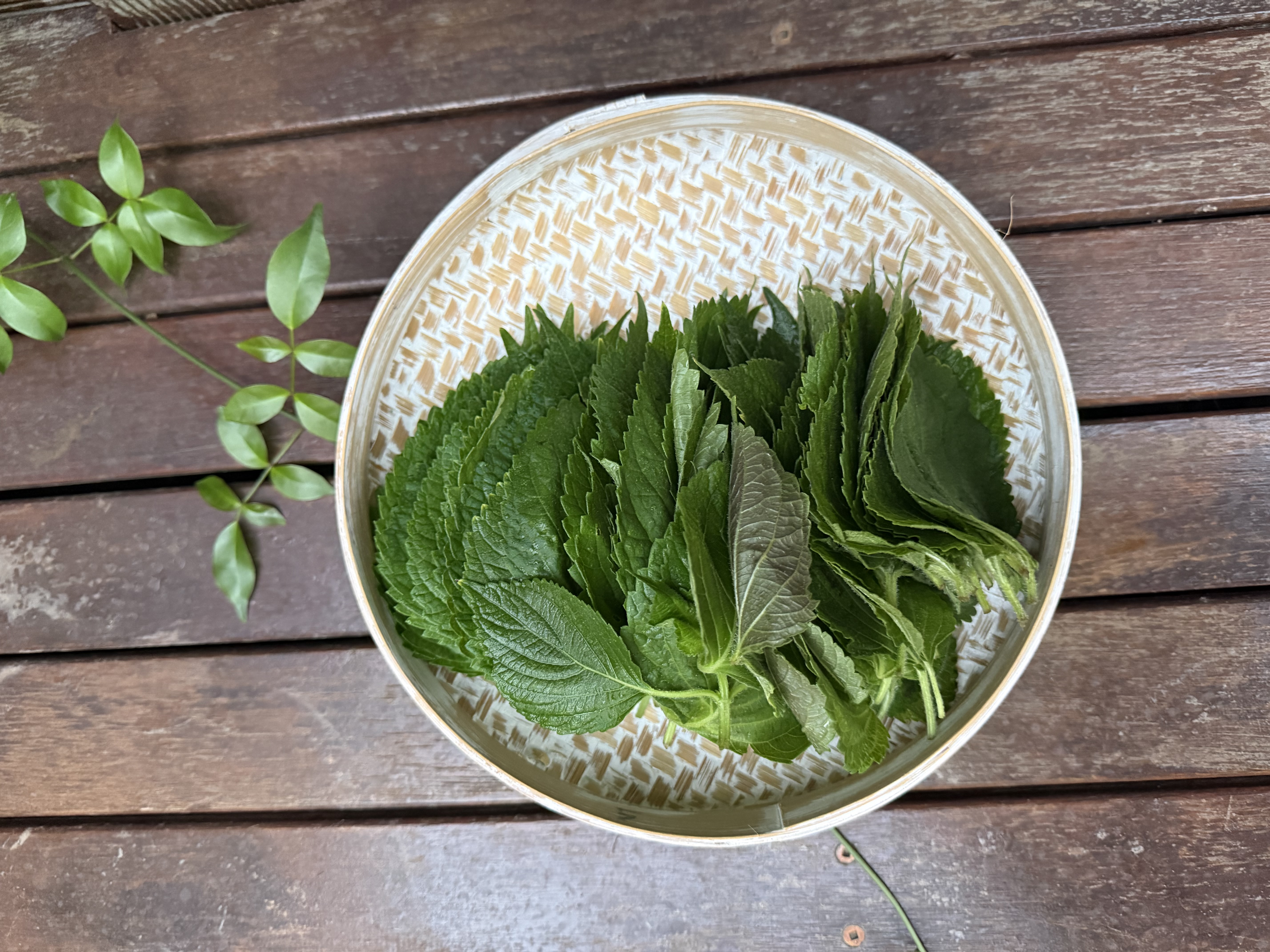
If you've eaten Korean food, you probably know kkaennip (깻잎), those beautifully fragrant green leaves often served alongside Korean barbecue.
Perilla leaves are closely related to soyeop (소엽, 紫蘇葉), the purple perilla leaf traditionally used in Korean and Chinese herbal medicine.
In traditional herbal theory, soyeop is considered warming and is used to regulate qi and address certain digestive symptoms, including nausea and abdominal discomfort.
Fresh culinary perilla leaves are not identical to a prescribed herbal preparation, but they share some aromatic compounds.
One of these is perillaldehyde, which contributes to perilla's distinctive fragrance.
To me, that scent is wonderfully familiar — fresh, slightly herbal and unmistakably Korean.
In Korea, perilla leaves are an everyday ingredient. You'll find them wrapped around rice, served with grilled dishes or tucked into all kinds of home-cooked meals.
And if you're in Australia, you can often find fresh perilla leaves at Korean grocery stores.
My favourite way to use them?
Perilla pesto.
Recipe: Perilla Pesto
Basil pesto, meet your Korean cousin.
This recipe brings the wonderful aroma of Korean perilla leaves into a familiar Mediterranean favourite. The pine nuts are gently toasted, the garlic is kept mild, and the pesto is especially lovely stirred through warm food.
Makes: About 1 cup
Preparation time: 15 minutes
Ingredients
- 30 fresh perilla leaves (about 40 g), washed, dried well and stems removed
- ⅓ cup (45 g) pine nuts, or toasted sunflower seeds for a nut-free alternative
- 1 small garlic clove
- ⅓ cup (25 g) finely grated Parmesan
- ½ cup (125 ml) extra-virgin olive oil
- 1 tsp lemon juice
- A pinch of salt
Method
- Toast the pine nuts. Place them in a dry pan over low heat for 3–4 minutes, stirring gently until golden and fragrant. Allow them to cool.
- Soften the garlic. If raw garlic tends to upset your stomach, gently cook the garlic clove in the same pan for 1–2 minutes until softened.
- Blend the ingredients. Add the perilla leaves, pine nuts, garlic, Parmesan, lemon juice and salt to a food processor. Pulse until finely chopped.
- Add the olive oil. With the motor running, slowly pour in the olive oil until the mixture is smooth but still slightly textured.
- Taste and adjust. Add a little more salt or lemon juice if needed.
How to Enjoy It
There are so many ways to enjoy this fragrant green pesto.
- Toss a spoonful through warm pasta or noodles.
- Serve it over meat dishes or with a soft-boiled egg.
- Add a little to softly cooked vegetables.
- Stir it into a warm soup just before serving.
A little tip: Add the pesto after removing your food from direct heat. Too much cooking can diminish that beautiful perilla fragrance.
And if your stomach gets overwhelmed easily, start with a small spoonful and see how you feel. Pesto is rich in oil, which some people with digestive symptoms may find difficult to tolerate in large amounts.
Storing Your Pesto
Transfer the pesto to a clean, airtight container and refrigerate promptly. Use within 3–4 days, or freeze individual portions for longer storage, ideally within 3 months for best quality.
Avoid leaving it at room temperature for prolonged periods. Instead, stir a refrigerated portion into warm food just before eating.
A Final Thought: Listen to Your Own Digestive Rhythm
We don't all digest food in exactly the same way.
Some people enjoy large meals without a second thought. Others feel better with smaller portions, gentler foods and a little more attention to their eating habits.
In East Asian medicine, this individuality is central to the idea of constitution.
Rather than forcing your body to follow someone else's habits, it may be more helpful to understand what makes your digestion feel comfortable.
Eat gently. Move regularly. Nourish yourself in a way that suits your body.
And perhaps add a little perilla pesto along the way.
Health note: Persistent early fullness, nausea, bloating or a sensation that food is not passing normally can have several medical causes. If symptoms persist, or occur alongside unexplained weight loss, repeated vomiting, difficulty swallowing, severe pain or black stools, seek medical assessment. Black stools or vomiting blood may require urgent care.
This article offers general information about traditional Korean medicine and everyday wellbeing. Constitutional interpretations are not substitutes for medical diagnosis, and the dietary suggestions described here are not established treatments for gastric motility disorders.
#소화건강 #소화불량 #위장건강 #체질의학 #사상체질 #소음인 #한의학 #양생 #건강한식습관 #소화가잘되는음식 #깻잎 #깻잎페스토 #건강레시피 #한국음식 #푸드테라피 #건강한라이프스타일 #KoreanMedicine #DigestiveHealth #GutHealth #SasangConstitution #ConstitutionalMedicine #Soeumin #Yangsaeng #MindfulEating #PerillaLeaves #PerillaPesto #HealthyRecipes #FoodAsMedicine #NourishToFlourish