Five Elements in Practice: Observation, Differentiation, and Constitutional Insight
From Treating Symptoms to Understanding the Whole Person
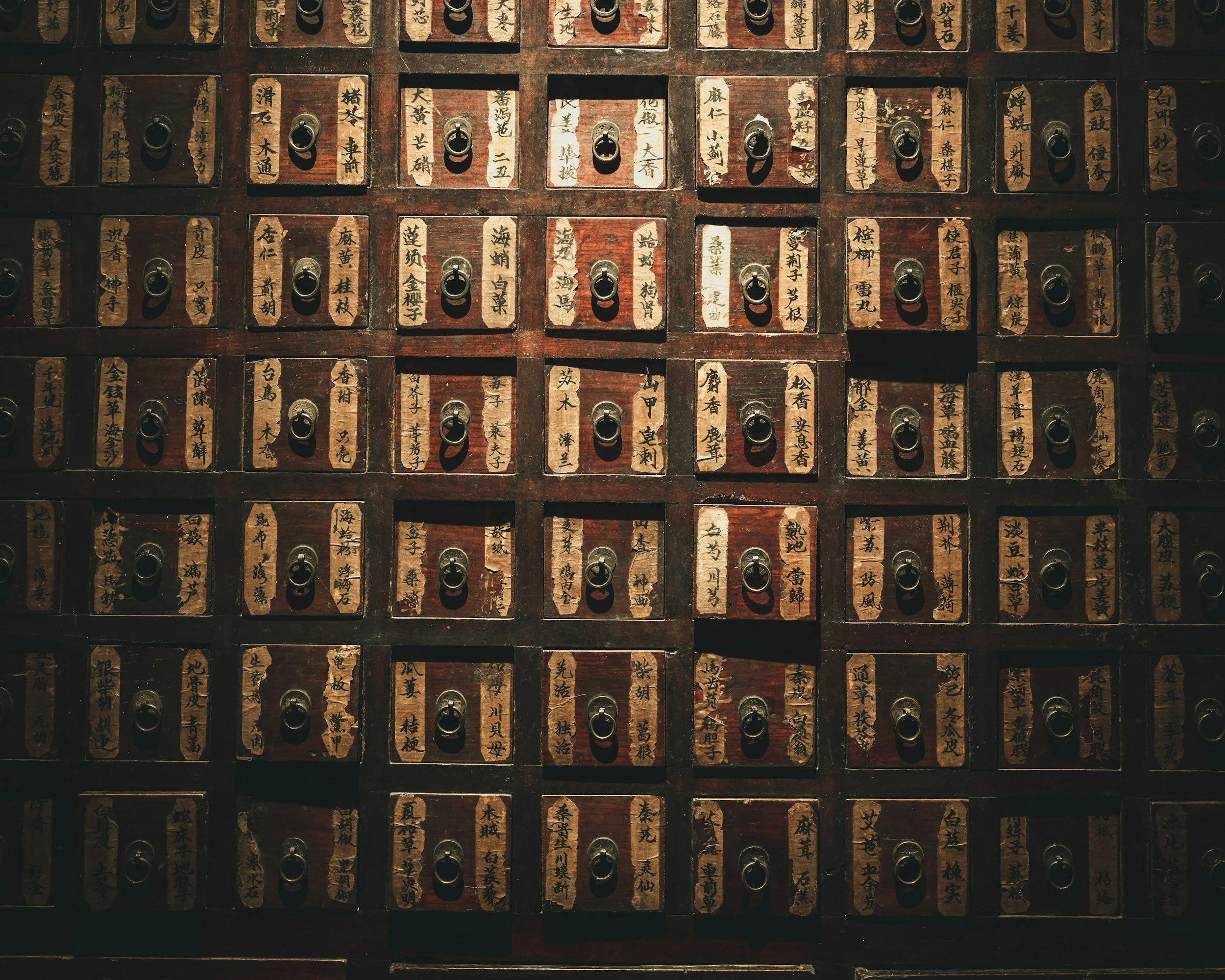
When I first began practicing as an acupuncturist and herbalist, my clinical approach was grounded primarily in symptom-based treatment. Like many practitioners, I relied heavily on classical herbal formulas, textbook acupuncture prescriptions, and standardized treatment methods. At the time, I already understood in theory that traditional medicine should not be confined to biomedical disease labels alone. We are taught to interpret patterns rather than simply chase symptoms. Yet in actual clinical practice, moving from symptom treatment toward true whole-person interpretation was far more difficult than I expected. It is one thing to understand holistic medicine conceptually. It is another thing entirely to perceive it clearly in front of a living patient.
Discovering the Eight Principles
Over time, I began sensing the limitations of purely symptomatic treatment, and my attention gradually shifted toward the Eight Principles (Ba Gang) framework. Through Yin and Yang, Cold and Heat, Deficiency and Excess, the Eight Principles offered a way to organize complexity into a coherent pattern. Rather than treating isolated complaints, I began asking:
“What is the overall direction of this person’s condition?”
This shift deepened my understanding that traditional medicine requires a broader observational lens. Symptoms alone rarely tell the full story. At the same time, another question remained unresolved for me:
How does diagnosis truly “move” into treatment? Even when I could identify patterns conceptually, the living relationship between diagnosis, meridians, and clinical response still felt incomplete.
Encountering Saam Five Element Acupuncture
Later, through a fortunate connection with a colleague, I was introduced to Saam Five Element Acupuncture — a tradition that integrates Five Element theory with Six Qi dynamics. Studying Saam acupuncture became a turning point in my clinical understanding. For the first time, the meridians no longer felt like abstract concepts or memorized pathways. They became something more tangible and experiential within treatment itself. Diagnosis began to feel alive. The relationship between pattern differentiation and treatment strategy became more direct, dynamic, and internally coherent. Yet even with deeper frameworks, difficult patients remained difficult. And the deeper I studied, the more I realized that complexity in medicine is not merely technical — it is deeply human.
What Draws Me Most Now: Constitutional Differentiation
More recently, my clinical perspective has moved increasingly toward constitution-based differentiation. This approach does not simply categorize disease. Instead, it interprets pathological patterns through the unique constitutional tendencies of the individual person. For me, this feels less like a rigid diagnostic system and more like an observation of life itself. Constitutional differentiation allows organ-system patterns, emotional tendencies, environmental influences, timing, and lived experience to be understood together rather than separately. Some patients cannot be fully understood through Eight Principles alone. Others cannot be understood through organ differentiation alone. Certain cases require a more integrated view — one that considers the person’s constitution, environment, rhythm of life, and the subtle way patterns interact over time. At this stage in my journey, integrating constitutional insight with traditional differentiation has become one of the most meaningful aspects of practice. There is something deeply satisfying about watching previously disconnected pieces slowly begin fitting together with greater precision.
Differentiation Is Endless Because Life Is Endless
Phenomenological observation has no true endpoint because human life itself is constantly changing. Every patient carries a different environment, temperament, history, and way of adapting to suffering. In many ways, studying Oriental medicine feels similar to travel. The more landscapes you encounter, the more your perception expands. The deeper clinical skill becomes, the more subtle differentiation becomes as well. This is why I often feel that traditional medicine is ultimately a lifelong practice of observation and interpretation. The art lies not only in memorizing formulas or point prescriptions, but in learning how to perceive patterns unfolding within the whole person.
Observe the Whole, Not Only the Symptom
To younger practitioners and students, I often return to the same advice:
Observe the whole.
We all begin with symptom-based learning, and this stage is necessary. But manuals can only take us so far. When a patient does not neatly fit textbook categories, purely formulaic thinking quickly becomes limiting. Phenomenological observation creates flexibility. It allows practitioners to perceive possibilities beyond rigid systems and respond to what is actually present. Anyone can imitate a manual. But true differentiation requires cultivated perception. And cultivated perception only develops through time, study, observation, and clinical experience.
Why “Secret Methods” Often Miss the Point
One pattern that concerns me within traditional medicine is the obsession with “secret formulas” or “hidden methods.” Many of these approaches are ultimately symptom-targeted techniques packaged as exclusivity. Because they are easy to imitate, they are often concealed and sold as secrets. But differentiation skill works differently. Even when openly taught, it cannot be copied instantly. It requires maturation, perception, and repeated clinical experience. This is why I believe students should invest less energy searching for shortcuts and more energy refining observation itself. Secret methods may apply only to certain diseases. Differentiation applies to every patient.
Learning Through Relationship
and Mentorship
Finally, I believe the deeper dimensions of traditional medicine are learned most
meaningfully through relationship. Traditional medicine cannot be reduced to
memorizing prescriptions or technical protocols alone. The art of interpretation
is subtle, living, and deeply experiential. This is why mentorship, dialogue, and
shared clinical reflection remain so important. The wisdom of differentiation is not
transmitted only through books. It is cultivated through conversation, observation,
practice, and the gradual refinement of perception over time.
