The Five Elements in Bibimbap and Hanok ; the Balance Reflected in the Rainbow Diet
The Essence of the Five Elements: Not Classification, but the Language of Balance
We often memorize the Five Elements (Wood, Fire, Earth, Metal, Water) as a simple system of categorization. Yet in truth, they are less about classification and more about a language of balance, a way of sustaining harmony in life.
The Five Elements provide a framework for understanding the movements of nature, and they extend beyond theory into the ways we relate to our bodies, our minds, and even the spaces we inhabit.
There are two places where this philosophy remains most beautifully and effortlessly alive in daily life: bibimbap and the feng shui of hanok.
Food and home.
What we eat and where we live.
The presence of the Five Elements in these everyday realms reminds us that tradition was never merely aesthetic, it was a lived philosophy of balance.
Interestingly, what we now call the rainbow diet echoes this same wisdom.
The Five Elements and the Five Colors: A Map of Balance in Color
If the Five Elements describe the flow of nature, the Five Directional Colors (Obangsaek) visualize that flow through color and orientation.
Traditionally, they are:
Blue/Green
Red
Yellow
White
Black
These colors were not chosen simply for beauty. They were associated with direction, season, energetic qualities — and most importantly, with the idea of not leaning too far in one direction.
Before they were decorative, they were diagnostic.
Color functioned as a sensory language of balance.
Bibimbap: The Harmony of the Five Elements in a Bowl
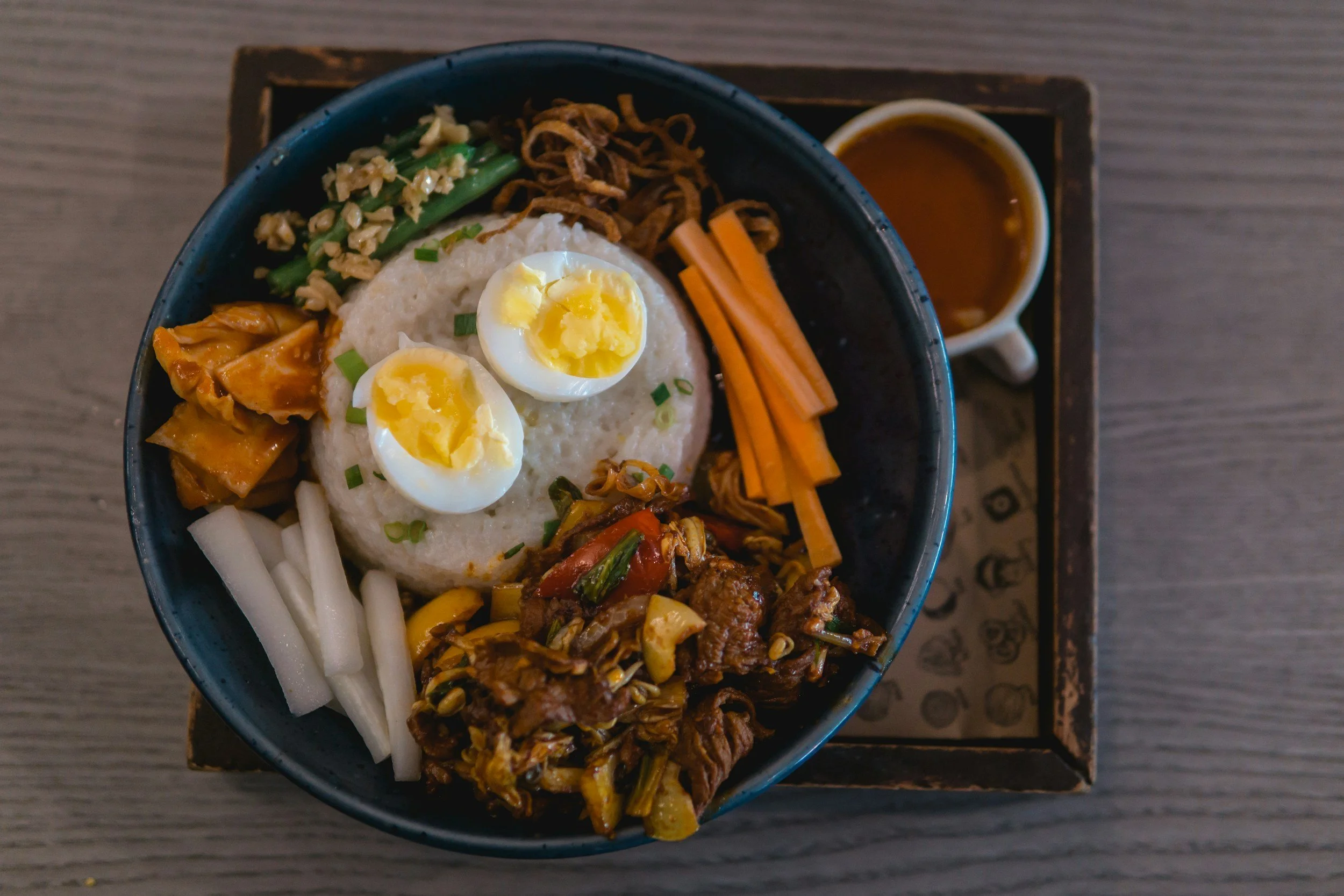
Bibimbap is not merely a mixture of ingredients.
It is a structure of coexistence.
Different colors, textures, and flavors share one bowl, and through the act of mixing, they move toward unity. This very structure reflects the core principle of the Five Elements — mutual support and dynamic balance.
Seen through color, bibimbap naturally mirrors the Five Colors:
Green: spinach, cucumber, water parsley
Red: gochujang, carrot
Yellow: egg yolk, pumpkin
White: rice, bean sprouts
Black: seaweed, mushrooms
The important point is not that we must deliberately fill all five colors, but that traditional sensibility already understood something profound: visual balance often parallels bodily balance.
A bowl that looks harmonious frequently feels harmonious after eating.
And the final actm mixing is symbolically powerful.
Each ingredient retains its character, yet none overwhelms the others. Through blending, they become one.
In the language of the Five Elements, bibimbap becomes a small ecosystem of regulation and interaction within a single bowl.
The Rainbow Diet: Modern Nutrition’s Rediscovery of Color
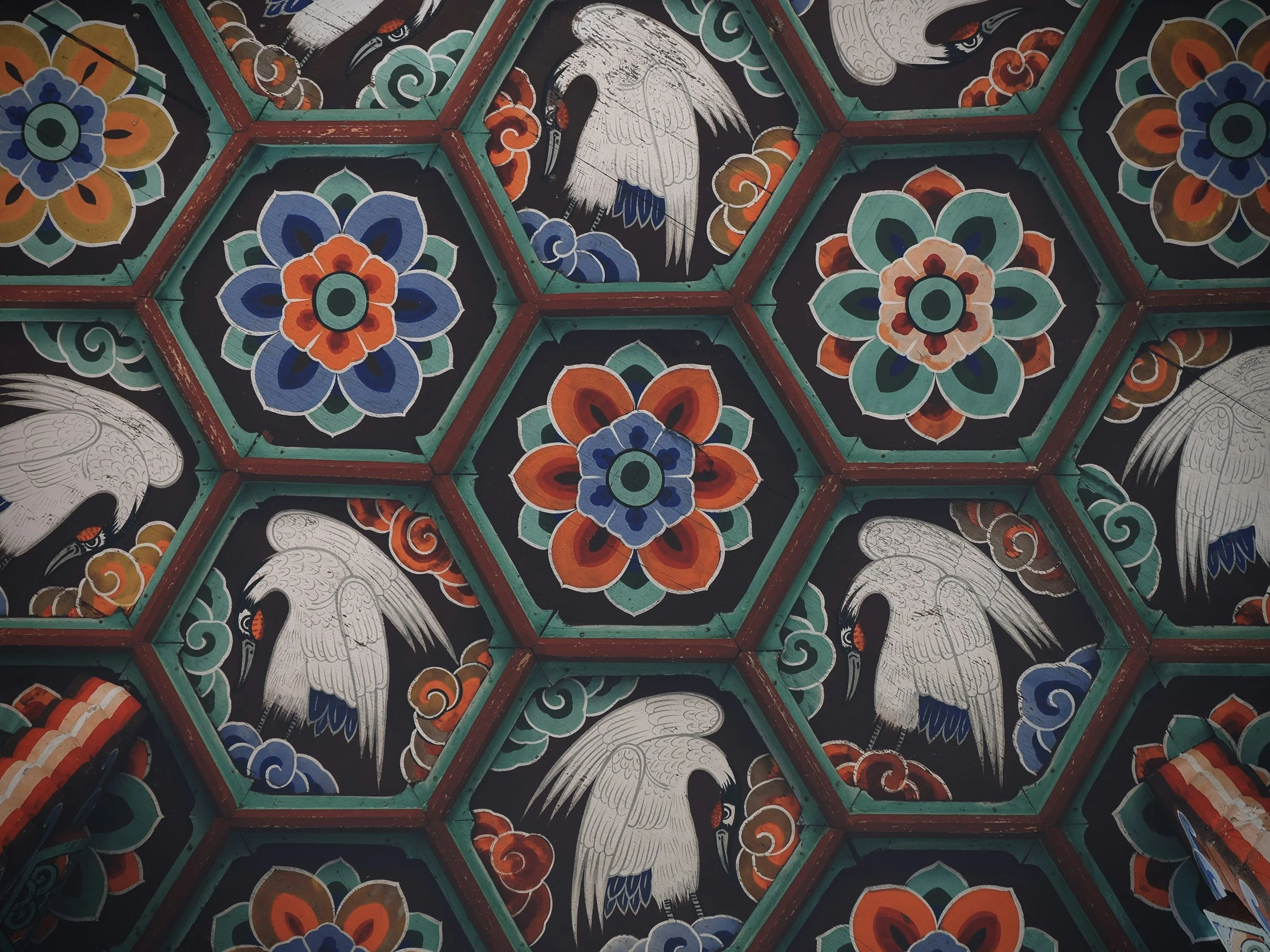
Today, health trends emphasize the “rainbow diet” encouraging the consumption of diverse, colorful vegetables and fruits.
Why color?
Because plant colors represent different phytochemicals:
Red: lycopene
Purple: anthocyanins
Green: chlorophyll and polyphenols
Orange/Yellow: beta-carotene
White: allicin and related compounds
The broader the color spectrum, the wider the range of nutritional compounds we receive.
What modern nutritional science explains biochemically, traditional philosophy once expressed symbolically.
Both ultimately convey the same message:
Do not remain in a single color.
Hanok and Feng Shui: The Rainbow of Space
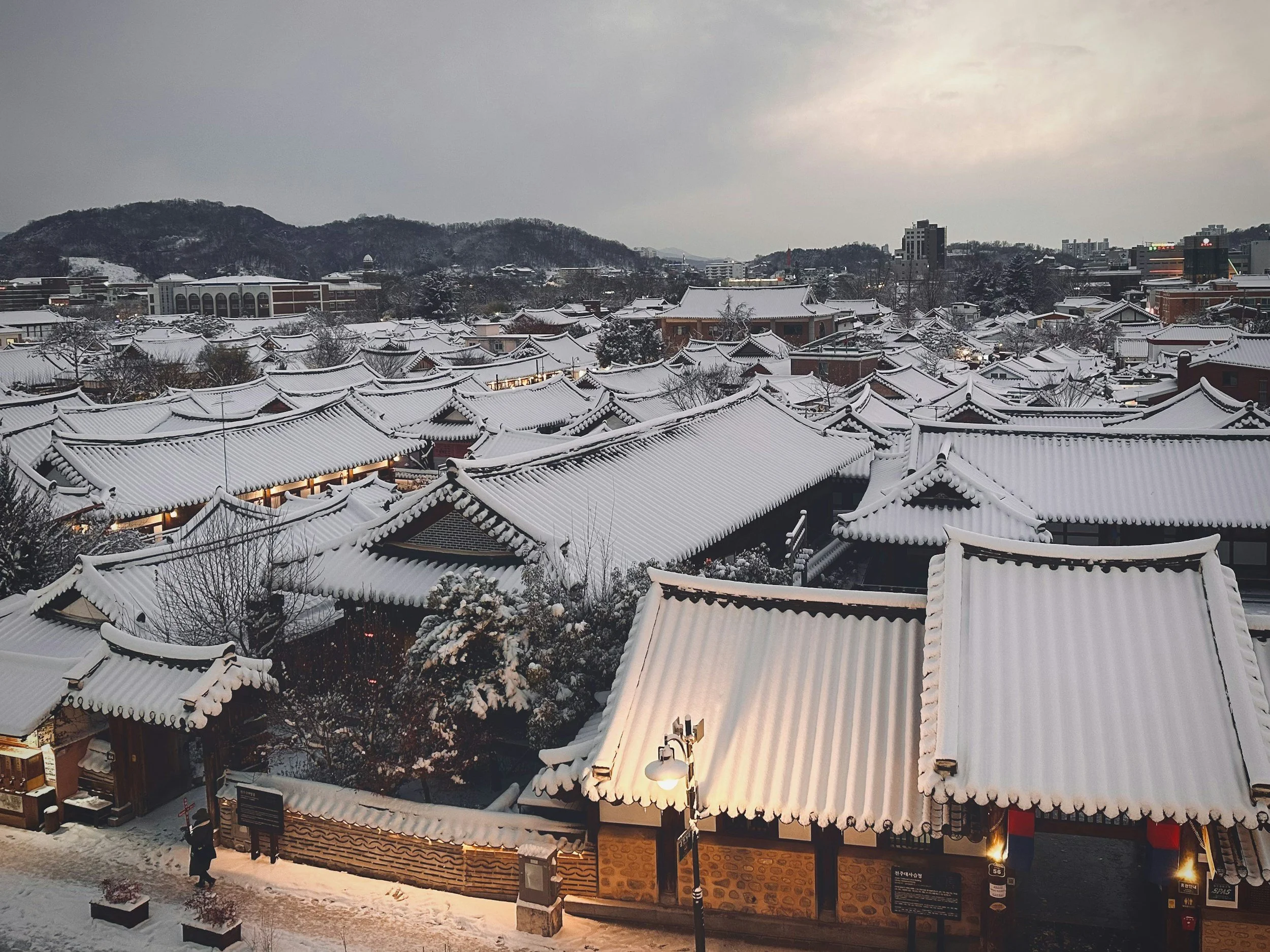
If bibimbap represents balance on the table, hanok represents balance in space.
1. Orientation and Light
Hanok architecture allows sunlight and wind to enter, not excessively, not insufficiently. It avoids overheating, dampness, and stagnation.
2. The Courtyard
An open courtyard creates circulation. Emptiness prevents blockage. When air and light move freely, so does the body and mind.
3. Natural Materials
Wood, earth, stone, water, and fire coexist without domination. Each element supports and regulates the others.
A hanok is, in many ways, a spatial rainbow — not emphasizing one force, but allowing complementary forces to coexist in equilibrium.
The Shared Message of Bibimbap, the Rainbow Diet, and Hanok
These three expression, a bowl, a dietary philosophy, and a house, ultimately speak the same truth:
Do not lean too far in one direction.
Do not block the flow.
Reduce excess, support deficiency.
The Five Elements are not rigid rules. They are reflective questions:
Where are you leaning too heavily right now?
Applying This to Modern Life
Does my plate reflect a diversity of color?
Am I relying too heavily on one kind of food?
Does my living space allow air, light, and rest to circulate?
Do I need to add something or remove something?
Balance is not a static achievement.
It is a daily act of adjustment.
Like bibimbap.
Like a rainbow.
Like a hanok.
Reflection
A bowl of bibimbap, a rainbow of foods, and a traditional hanok house all whisper the same message:
“Health emerges from harmony.”
The Five Elements and the Five Colors may be ancient ideas, yet their sensibility remains strikingly relevant.
We still eat.
We still dwell.
And we are still seeking balance.
오행의 본질: 분류가 아니라 균형의 언어
오행의 본질은 단순한 분류 체계가 아니라, 삶을 조화롭게 유지하기 위한 균형의 언어에 가깝습니다. 자연의 흐름을 설명하는 틀이자, 인간의 몸과 마음, 그리고 공간을 다루는 세계관이기도 합니다.
그 철학이 가장 일상적으로 그리고 아름답게 남아 있는 곳이 있습니다.
하나는 비빔밥, 또 하나는 한옥의 풍수입니다.
음식과 집.
‘먹는 것’과 ‘사는 곳’에 오행이 스며 있다는 사실은, 전통이 과거의 장식이 아니라 생활 속에서 구현된 균형의 철학이었다는 것을 보여줍니다.
그리고 흥미롭게도, 오늘날 우리가 말하는 ‘무지개 식단’ 역시 같은 이야기를 하고 있습니다.
오행과 오방색: 색으로 드러난 균형의 지도
오행이 자연의 흐름을 설명한다면, 오방색(五方色)은 그 흐름을 색과 방향으로 시각화한 상징 체계입니다.
청(푸른색)
적(붉은색)
황(노란색)
백(흰색)
흑(검은색)
이 다섯 색은 단지 미적인 조합이 아닙니다.
전통에서는 방향·계절·기운의 성격과 연결되며, 한쪽으로 치우치지 않는 상태를 상징했습니다.
즉 오방색은 “예쁜 색”이 아니라,
균형을 확인하는 감각의 언어였습니다.
비빔밥: 한 그릇 안에 담긴 오행의 조화
비빔밥은 서로 다른 성질을 가진 재료들이 한 그릇 안에서 상생하고 조율됩니다.
색으로 보면 오방색이 자연스럽게 드러납니다.
초록(청): 시금치, 오이, 미나리
빨강(적): 고추장, 당근
노랑(황): 달걀노른자, 호박
흰색(백): 밥, 콩나물
검정(흑): 김, 표고
눈으로 보기에 균형 잡힌 그릇은, 대개 먹고 나서도 편안합니다.
전통은 이미 색의 균형이 몸의 균형과 연결된다는 감각을 알고 있었던 셈입니다.
그리고 마지막 동작인 “비비기”는 더 상징적입니다.
각자의 성질을 유지하면서도 하나의 조화로 돌아가는 과정.
비빔밥은 한 그릇 안에서 이루어지는 작은 생태계입니다.
무지개 식단: 현대 영양학이 발견한 색의 힘
오늘날 건강 트렌드 중 하나가 바로 무지개 식단입니다.
다양한 색의 채소와 과일을 섭취하라는 권장입니다.
왜 색을 강조할까요?
식물의 색은 단순한 색소가 아니라, 각각 다른 파이토케미컬(식물성 생리활성 물질)을 의미합니다.
빨강: 라이코펜
보라: 안토시아닌
초록: 엽록소와 폴리페놀
주황/노랑: 베타카로틴
흰색: 알리신 등
색이 다양할수록 섭취하는 영양 스펙트럼이 넓어집니다.
이 개념은 놀랍게도 오방색의 감각과 닮아 있습니다.
전통은 철학으로,
현대는 영양학으로,
같은 메시지를 전합니다.
“한쪽 색에 머물지 말라.”
한옥 풍수: 공간의 무지개
비빔밥이 식탁 위의 균형이라면, 한옥은 공간 속의 균형입니다.
1) 방향과 채광
빛과 바람을 과하지 않게 들이는 구조.
과열도, 과냉도 피하는 설계.
2) 마당
비워 둔 공간이 흐름을 만듭니다.
막힘이 줄어들면 몸과 마음도 가벼워집니다.
3) 자연 재료
나무, 흙, 돌, 물, 불.
서로 다른 성질이 한 공간 안에서 조화됩니다.
한옥은 일종의 공간적 무지개입니다.
특정 요소를 강조하지 않고, 서로가 서로를 보완하도록 설계된 집.
비빔밥·무지개 식단·한옥이 말하는 공통된 메시지
이 셋은 결국 같은 이야기를 합니다.
치우치지 말 것.
흐름을 막지 말 것.
과함을 줄이고, 부족함을 보완할 것.
오행은 “정답”이 아니라,
“지금 어디로 기울어 있는가?”를 묻는 질문입니다.
오늘의 삶에 적용해 본다면
내 식탁은 색이 다양할까?
나는 특정 음식에만 집착하고 있지 않을까?
내 공간은 숨이 통하는 구조일까?
나는 지금 더해야 할까, 덜어야 할까?
균형은 완벽한 상태가 아니라,
매일 조율하는 과정입니다.
비빔밥처럼,
무지개처럼,
한옥처럼.
비빔밥 한 그릇, 무지개 식단, 그리고 한옥 한 채.
이들은 모두 우리에게 같은 말을 건넵니다.
삶은 균형으로 건강해진다.
오행과 오방색은 오래된 개념이지만,
그 감각은 여전히 유효합니다.
우리는 여전히 먹고,
여전히 살며,
여전히 균형을 찾는 존재이기 때문입니다.